

This morning I woke up earlier than usual. I felt tired as I always do when I first wake up, but my brain was extra busy. Then suddenly a thought POW!ed into my head.
I’d been ruminating on an old idea for my business, figuring out if/how to resurrect it, and suddenly it all became crystal clear. I grabbed my phone so I could record this (genius!) thought into my Notes app before I forgot it entirely.
And it got me thinking about ADHD business planning and how differently our brains can work when we’re trying to figure out what’s next.
Sometimes the best ideas don’t happen when you’re “doing the work”
Often, this is how things happen: the thought comes together at some apparently totally random moment. Not when it’s convenient. Not when I’ve put time aside for brainstorming.
Just – ooop, there it is.
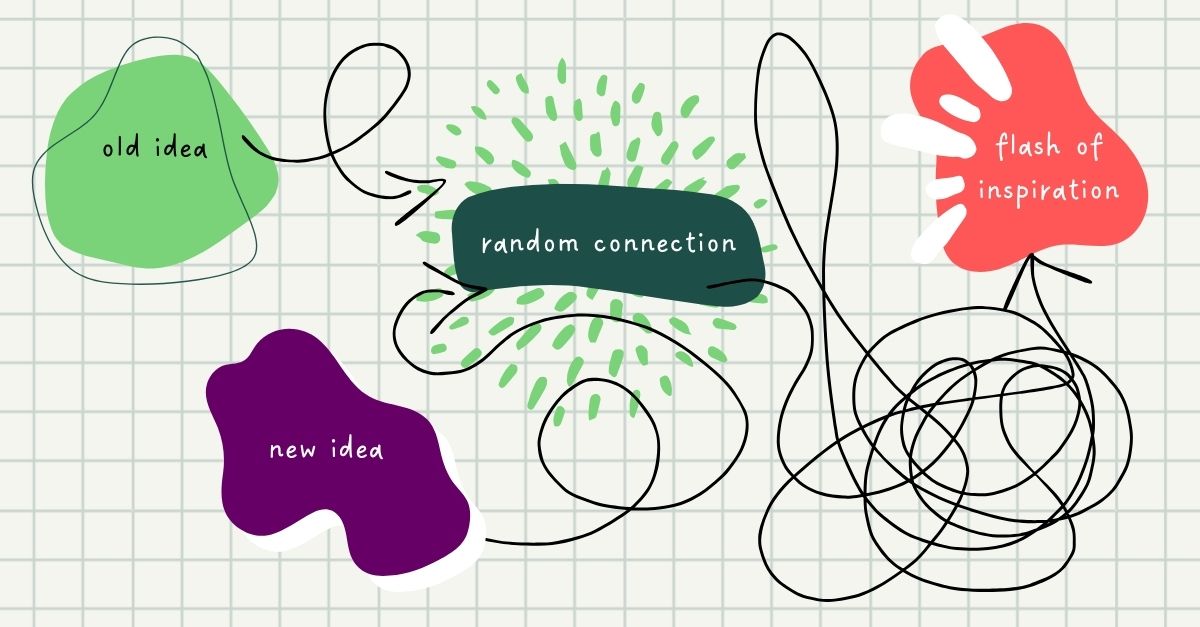
And this particular idea might actually be a game changer for me. It connects an old idea I’ve been thinking about resurrecting, with a new idea I’ve wanted to implement for ages. And the delivery method would also be a much better fit for my life, my brain and how I work best.
So why does this magical connection happen when I’m half asleep?
Well, in truth it’s not totally random.
I’ve recently been working through a process of business planning over the last couple of weeks. Not traditional (to me, ultra boring) business planning for the bank manager, but something much more engaging and tangible because it’s focused on the next few months rather than the next five years.
I’ve deliberately been taking time away from the day-to-day to think about:
What I really want
What I love to do
What I want more of
Who I want to work with
What products and services I want to focus on
What I want to try next
And because I’ve been deliberately thinking about those things, my brain has had something to work with.
The idea that arrived this morning wasn’t written down during my business-planning time. But it didn’t come from nowhere either.
ADHD doesn’t always do business planning in a straight line…
- You brainstorm.
- You work through all the different parts of your business plan.
- You make decisions.
- You create an action plan
Well, first off, this way of doing things kind of sucks if you have ADHD.
Your thought process probably jumps around more than House of Pain.
You might actually struggle with that linear process where you work through one section, make a decision, check the box and move on to the next. Your brain might jump from one idea to another. It might make connections that don’t seem relevant at first. It might come up with something completely new while you’re supposed to be answering a question about your ideal client.
And sometimes that’s exactly where the useful stuff is.
The creative jumping around is NOT a problem that needs to be eliminated.
No matter what your teachers tried to tell you at high school about staying focused on the task in hand or not getting distracted, in entrepreneurship, thinking creatively like this might just be the thing that sets you apart.
That doesn’t mean you need to abandon all structure. It means the structure needs to leave some room for your brain to do what it does.
Give your brain something to think about
This is the bit I think we sometimes miss with ADHD business planning.
Taking intentional time away from the day-to-day does matter. You do need to make space to think about the bigger picture.
But that doesn’t necessarily mean you’ll have all your best ideas while you’re sitting at your desk during your carefully scheduled two-hour “strategic thinking” session.
The value of that time might show up later. You might go for a walk and suddenly see the connection. You might have a conversation that suddenly makes something click. You might be driving and suddenly know what you’ve been trying to figure out. You might wake up at 5.07am with an idea that seems completely obvious in hindsight.
That’s not a failure of the planning process. It’s a direct result of the planning process.
You’ve given your brain some questions to chew on. You’ve directed your attention towards what matters. And then your brain carries on working on it in the background.
Your business plan doesn’t have to be rigid
This is also why I don’t think an ADHD-friendly business plan should be treated as a fixed set of decisions. Things change. You learn stuff. You have ideas. Opportunities appear. You change your mind. And sometimes you realise that the thing you thought you wanted isn’t actually what you want at all. So why create a five-year plan and then spend the next five years trying to make reality match it?
I’d rather have enough clarity to know what matters now, while leaving enough room to respond to what happens next.
That’s the thinking behind The Business Plan You’ll Actually Use.
It’s designed as a practical 3–6 month-ish view of your business, rather than a beautifully organized document pretending you know exactly what the future holds.
You use it to get clear on what’s important, what you want more of, what you’re selling, who you want to work with and what you’re going to try.
And then… you actually use it.
You can come back to it. You can change it. You can add the brilliant idea that arrived while you were half asleep.
Business planning doesn’t have to mean planning everything
If you’ve struggled with business planning because it feels:
- Too rigid
- Too linear
- Too boring
- Too much like making fixed decisions
- Too focused on the distant future
- Not creative enough
- Or just… ugh… planning
…that doesn’t mean you’re bad at business.
It might mean the process you’ve been given isn’t a particularly good fit for how you think.
You don’t need to know exactly where you’re going before you start moving.
You need enough clarity to choose a direction. And then you can see what happens.
In the meantime, keep your Notes app handy. Because apparently your brain may have its best business ideas at the least convenient possible moment..